

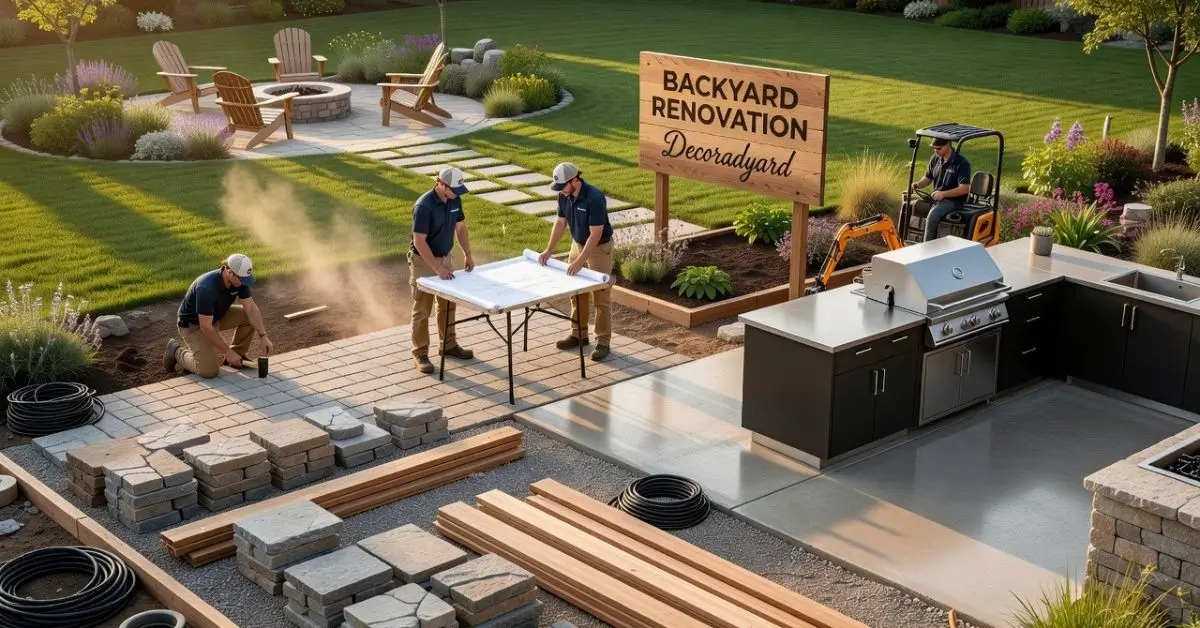
Backyard Renovation Decoradyard
Looking out at a backyard that is overgrown, muddy, or completely bare can make you feel disconnected from your outdoor space. Many homeowners want a private outdoor retreat for family barbecues and quiet evenings, but they get stuck when facing high contractor quotes, confusing material choices, and uneven yard slopes. When people start digging without a clear plan, they often spend thousands of dollars on plants that die or patios that crack after the first winter freeze.
Learning how to plan an outdoor renovation properly solves these common landscaping headaches. Transforming your yard does not require an unlimited budget or a full construction crew. When you understand how to grade your soil for drainage, create functional outdoor living zones, choose durable patio materials, and layer warm lighting, you can turn any ordinary yard into a stunning, functional oasis.
In this practical guide, you will discover how to divide your yard into purposeful activity areas, pick the best hardscaping materials, select low-maintenance plants, and manage your renovation budget effectively.
The phrase backyard renovation decoradyard refers to a comprehensive outdoor design framework focused on turning residential backyards into functional, beautiful living spaces. It emphasizes smart land grading, multi-zone space planning, durable hardscaping, native planting, and atmospheric lighting to create low-maintenance, long-lasting outdoor retreats that increase daily enjoyment and boost property value on realistic everyday budgets.
Quick Summary
Successful backyard transformations begin with proper drainage and functional zoning before adding decorative finishes. Divide your yard into distinct zones for dining, lounging, and gardening. Choose long-lasting hardscaping like concrete pavers or natural stone, plant native perennials to reduce watering needs, and layer warm 2700K lighting to create an inviting evening atmosphere.
The Decoradyard Philosophy: Balancing Function and Nature
A great backyard is more than just a patch of green grass with a fence around it. It should function as an outdoor living room that extends the usable square footage of your home into the fresh air.
When planning an outdoor transformation, the principles of backyard renovation decoradyard prioritize daily usability and long-term durability. Instead of trying to maintain high-maintenance golf course turf that requires weekly chemical treatments and constant mowing, this approach creates a balanced landscape that works with your local climate.
By blending hard surfaces like stone patios with soft elements like flower beds, shade trees, and mulch walkways, you create a dynamic environment that looks attractive in every season. This balanced design gives kids and pets room to play while giving adults a comfortable space to entertain friends and unwind after a long week.
Zone Planning: Designing Functional Outdoor Rooms
If you place your grill, dining table, fire pit, and lawn games all in one small area, your backyard will feel cluttered and chaotic. Creating distinct outdoor zones gives every activity its own dedicated space and allows people to move through the yard naturally.
Applying backyard renovation decoradyard planning methods helps you divide your property into four purposeful living areas:
Backyard Living Zones
├── 1. Al Fresco Dining Zone (Hard surface near house with grill access)
├── 2. Evening Lounge Zone (Fire pit, comfortable seating, & outdoor rug)
├── 3. Active Play & Lawn Zone (Open grass or turf for children & pets)
└── 4. Garden & Utility Zone (Raised vegetable beds, shed, & compost)
1. The Al Fresco Dining Zone
Place your dining table and cooking area close to your home backdoor or kitchen entrance. This makes carrying plates, drinks, and food trays outside easy during family dinners. Use a solid, flat hardscape surface like stone pavers or poured concrete so chairs sit level and table legs do not sink into the soil.
2. The Evening Lounge and Fire Pit Zone
Position your conversation area further out into the yard to create a destination spot that draws people away from the house. Arrange an outdoor sofa and weather-resistant armchairs around a wood-burning fire pit or a push-button propane fire table. Keep seats 3 to 4 feet away from the flame for safety and comfort.
3. The Active Lawn Zone
Reserve a clean, open rectangle of natural grass or durable artificial turf for recreational activities. Keeping this area free of low obstacles allows children and pets to run freely without damaging delicate garden beds.
4. The Garden and Utility Zone
Group your raised garden boxes, tool shed, and compost bins along a sunny side fence or rear corner. Placing garden beds where they receive at least six hours of direct sunlight ensures your vegetables and herbs grow healthy and productive.
Hardscaping Selection: Pavers, Decks, and Paths
Hardscaping provides the physical skeleton of your backyard. The surfaces you walk on and sit on must withstand rain, snow, hot sun, and heavy foot traffic without cracking or rotting.
When choosing materials under a backyard renovation decoradyard approach, consider the maintenance needs and lifespan of each option:
Concrete Pavers
Interlocking concrete pavers are the most popular patio choice in modern residential landscaping. They come in dozens of colors, shapes, and textures that mimic natural stone. Because pavers are individual units set on a flexible sand and gravel base, they can shift slightly with seasonal ground freezes without cracking. If a single paver is stained by grill grease, you can simply pull it out and replace it.
Natural Flagstone and Slate
Natural stone creates an organic, timeless look with unique color variations. Irregular flagstone set into crushed granite or pea gravel creates a relaxed cottage appearance, while dimensional cut stone provides a sleek, modern finish. Natural stone is extremely durable, though it requires skilled installation to ensure surfaces remain flat and safe for walking.
Composite Decking
If your yard slopes steeply away from your house, building a raised deck is often more practical than building up heavy retaining walls for a patio. Modern composite decking made from recycled wood fibers and plastic polymers resists rot, splintering, and insect damage. Unlike traditional pressure-treated pine, composite boards never require annual staining, sanding, or chemical sealing.
Hardscaping Surface Material Comparison
The table below illustrates how backyard renovation decoradyard frameworks evaluate common hardscaping materials across installation costs, maintenance requirements, and overall durability:
| Material Type | Typical US Cost / Sq. Ft. | Expected Lifespan | Maintenance Level | Best Application |
|---|---|---|---|---|
| Interlocking Concrete Pavers | $12 to $22 installed | 30+ years | Low (Sweep & re-sand joints every 3 yrs) | Main dining and lounge patios |
| Natural Flagstone | $18 to $32 installed | 40+ years | Very Low (Occasional power wash) | Stepping stone paths and rustic patios |
| Composite Decking | $25 to $45 installed | 25 to 30 years | Very Low (Wash with mild soap) | Raised decks on sloping yards |
| Pea Gravel / Crushed Stone | $4 to $8 installed | 15+ years | Moderate (Rake smooth & pull weeds) | Casual fire pit circles and pathways |
| Poured Broom-Finish Concrete | $8 to $14 installed | 20 to 25 years | Low (Seal every 2 to 3 years) | Budget-friendly basic patio slabs |
| Pressure-Treated Wood Deck | $15 to $25 installed | 10 to 15 years | High (Annual cleaning, stain every 2 yrs) | Low-cost elevated wooden platforms |
Real-World Case Study: A $3,800 Phased Backyard Makeover
You do not need to spend tens of thousands of dollars on custom masonry to transform a plain backyard into an inviting retreat. Strategic DIY projects and smart material choices allow you to build an incredible outdoor living space on a sensible budget.
Executing a smart backyard renovation decoradyard project on a budget produces remarkable visual and lifestyle improvements.
Consider this realistic US example: A family in Charlotte, North Carolina had a plain 1,200-square-foot backyard with patchy turf, a broken wooden picnic table, and poor drainage that created mud puddles near the back steps. The homeowners set a strict $3,800 total budget across a three-phase spring project.
Here is how they allocated their funds:
- Phase 1: Drainage and Grading ($450)
- Rented a motorized tiller and plate compactor for a weekend ($180)
- Installed a 30-foot French drain with perforated pipe and gravel to redirect roof runoff away from the patio ($270 DIY)
- Phase 2: Pea Gravel Fire Pit Patio ($1,250)
- Excavated a 14-foot circular area and laid heavy-duty woven geotextile weed fabric ($140)
- Installed flexible metal landscape edging around the perimeter ($180)
- Delivered 3 tons of washed river pea gravel ($380)
- Built a circular stone fire pit using stacked concrete wall blocks and steel fire ring ($280 DIY)
- Purchased four weather-resistant Adirondack chairs on seasonal sale ($270)
- Phase 3: Softscaping, Lighting, and Garden Borders ($2,100)
- Built two 4×8-foot cedar raised garden boxes with nutrient-rich topsoil ($320 DIY)
- Planted native perennial shrubs, lavender bushes, and ornamental grasses ($680)
- Applied 4 yards of dark organic bark mulch to garden beds ($240)
- Installed commercial-grade LED string lights on wooden support poles ($160)
- Installed low-voltage solar path lights along walkways ($120)
- Lay fresh fescue sod in the active play zone ($420 DIY)
- Contingency supplies, hardware, and delivery fees ($160)
Total project expenditure equaled exactly $3,800. In three weekends of family work, the homeowners eliminated mud puddles, built an evening fire pit lounge, planted productive garden beds, and added an estimated $12,000 in perceived property value.
Softscaping: Planting for Privacy, Color, and Low Maintenance
Softscaping refers to all the living elements in your yard, including grass, shrubs, perennial flowers, and shade trees. Choosing the right plants ensures that your yard looks vibrant without demanding hours of weeding and watering every week.
Key planting strategies for an attractive, stress-free garden include:
Smart Planting Structure
├── 1. Perimeter Privacy Screens (Evergreen arborvitae & skip laurels)
├── 2. Native Perennial Borders (Coneflowers, black-eyed Susans, & salvia)
├── 3. Structural Ornamental Grasses (Feather reed grass & blue fescue)
└── 4. Organic Mulch Beds (Conserves moisture & stops weed growth)
Plant Native Species
Native plants are species that naturally thrive in your geographic region. Because they are adapted to your local rainfall levels, soil conditions, and temperatures, they require significantly less water and fertilizer than exotic plants. Native flowers also attract beneficial pollinators like butterflies and hummingbirds to your garden.
Build Natural Privacy Screens
Instead of installing tall, cold wooden fences that can make a yard feel boxed in, plant living privacy hedges. Fast-growing evergreen shrubs like Green Giant arborvitae, skip laurels, or clumping bamboo provide dense green foliage all year long, blocking views from neighboring windows and muffling street traffic noise.
Layer Plant Heights
When designing flower beds, arrange plants in three tiers. Place tall shrubs and small ornamental trees at the back against fences, mid-sized flowering perennials in the center, and low creeping groundcovers along the front stone borders. This creates depth and makes garden beds look lush and full.
Ambient Outdoor Lighting and Heating
Lighting is what turns a daytime garden into an enchanting nighttime lounge. Without proper lighting, your backyard becomes unusable as soon as the sun goes down.
Incorporate core lighting ideas in backyard renovation decoradyard designs to create balanced illumination across three heights:
- Overhead String Lights: Hang commercial-grade Edison-style LED string lights in a zig-zag pattern over your patio or fire pit area. Use warm white bulbs rated at 2200K to 2700K to cast an inviting golden glow that feels like candlelight.
- Low-Voltage Pathway Lighting: Place small stake lights along walkways, steps, and patio borders. This provides safety for walking in the dark while highlighting your garden textures.
- Tree Uplighting: Mount low-voltage LED spotlights at the base of mature trees and aim the beams upward into the branches. This architectural technique creates dramatic focal points and makes your yard feel deeper after dark.
To extend your outdoor season into chilly autumn and early spring months, add heating elements like a propane patio heater or a tabletop fire bowl so you can enjoy fresh air even when temperatures drop.
Common Renovation Mistakes to Avoid
Avoiding typical landscaping errors will save you thousands of dollars and prevent frustrating structural failures down the road.
1. Ignoring Yard Drainage and Slope
Never build a patio or garden bed that slopes toward your home foundation. All hardscaping surfaces should slope away from your house at a minimum grade of 1 inch for every 8 to 10 feet of distance to ensure rainwater drains safely away from your basement and foundation walls.
2. Skipping Proper Base Preparation
A patio is only as stable as the ground beneath it. If you lay pavers directly on top of soil without a compacted gravel and sand base, the stones will sink, tilt, and become tripping hazards after the first heavy rain. Always dig down 6 to 8 inches, lay crushed stone base, and compact it thoroughly with a plate compactor.
3. Forgetting Utility Line Locations
Before digging any holes for fence posts, trees, or retaining walls, always call 811 in the United States to have underground utility lines marked for free. Striking a buried gas line, power cable, or water pipe is dangerous and causes expensive repair bills.
Conclusion
Renovating your backyard is one of the most rewarding home improvements you can undertake. It creates an outdoor sanctuary where your family can share meals, play games, and relax by the fire under the open sky.
By prioritizing proper drainage, establishing functional living zones, investing in durable stone or composite hardscaping, and choosing hardy native plants, you can design a yard that stays beautiful and easy to maintain for decades to come.
Reviewing your backyard renovation decoradyard plan every spring allows you to add fresh mulch, prune shrubs, inspect lighting cables, and keep your outdoor living room ready for seasonal entertaining all year long.
If you found this outdoor renovation guide helpful, share it with fellow homeowners and explore our other landscape design resources to keep discovering practical home improvement inspiration.
Frequently Asked Questions
What is backyard renovation decoradyard in simple terms?
Backyard renovation decoradyard focuses on creating functional outdoor spaces with zones for seating, patios, plants, drainage, and lighting.
How much does a full backyard renovation typically cost in the US?
A basic DIY refresh may cost $2,000–$6,000, while a professional mid-range renovation can range from $12,000–$30,000 depending on the yard and materials.
What is the cheapest material for an outdoor patio?
Pea gravel and crushed granite are among the most affordable options. They provide good drainage and can be installed relatively easily.
How do I prevent weeds in gravel patios?
Remove the soil, install woven landscape fabric, add about 3 inches of gravel, and use edging to limit grass and weed growth.
What are the best low-maintenance backyard plants?
Native plants such as coneflowers, black-eyed Susans, lavender, hostas, and ornamental grasses are good options because they generally need less maintenance.