

Introduction
Your website looks great. The pages load fast, the content is helpful, and you have optimized every title tag and heading. But your rankings are stuck. You are doing everything right on your site, yet competitors with weaker content keep outranking you.
The missing piece is probably not on your website at all. It is happening everywhere else on the internet.
This is where off-page SEO services come in. They focus on building your website’s reputation, authority, and trust across the web through backlinks, brand mentions, and strategic outreach.
Off-page SEO services are professional solutions that improve your website’s authority and search rankings through activities that happen outside your own site. This includes building high-quality backlinks, earning brand mentions, managing online reviews, and creating digital PR campaigns that signal trust to search engines like Google.
Quick Summary
Off-page SEO is everything that happens away from your website to boost its search rankings. The biggest factor is backlinks from trusted sites. Professional off-page SEO services handle link building, brand mentions, and outreach so your site gains the authority it needs to compete in search results.
Why Off-Page Work Matters Just as Much as On-Page
Many business owners spend all their time and budget fixing things on their own website. They optimize content, improve page speed, and clean up technical errors. These steps are important, but they only solve half the puzzle.
Google does not just look at your website to decide where you rank. It also looks at what other websites say about you. Think of it like a job interview. Your resume matters, but references from respected people in your industry carry a lot of weight too.
Backlinks are those references. When a trusted website links to your page, Google sees it as a vote of confidence. The more quality votes you have, the higher you rank.
Here is a real example. A mid-size accounting firm in Dallas had excellent on-page optimization but very few backlinks. Their main competitor had weaker content but over 500 referring domains. The competitor ranked on page one for every important keyword while the accounting firm sat on page three. After six months of focused link building and digital outreach, the firm gained 120 new quality backlinks and moved into the top five for their most valuable keywords.
That is the power of off-page authority.
What Do Off-Page SEO Services Actually Include?
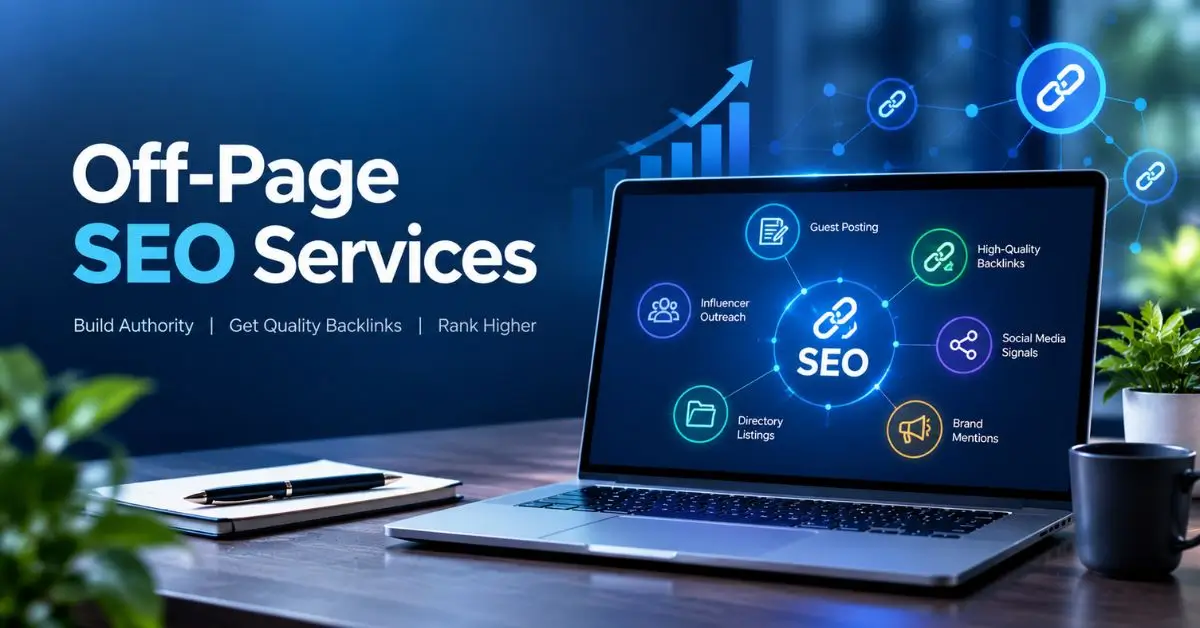
When you hire a team for off-page SEO services, they are not touching your website code or rewriting your blog posts. They are working across the wider internet to build your site’s credibility. Here is what that work typically covers.
Link Building
This is the core of any off-page strategy. Link building means getting other websites to link back to your pages. But not all links are equal. One link from a respected industry publication is worth more than 100 links from random, low-quality directories.
A professional team will identify relevant websites in your niche, create content those sites want to reference, and reach out to editors and webmasters to earn placements. Common methods include guest posting on industry blogs, creating shareable research or infographics, and finding broken links on other sites that your content can replace.
Digital PR and Brand Mentions
Digital PR involves getting your brand featured in online news articles, industry roundups, and expert quote pieces. Even if these mentions do not always include a direct link, they still build brand recognition and trust signals that Google notices.
For example, if your CEO gets quoted in a Forbes article about small business finance, that mention builds authority even without a hyperlink. A good off-page team will pitch your experts to journalists and bloggers who cover your industry.
Local Citations and Directory Listings
For businesses that serve local customers, consistent citations across directories like Yelp, Yellow Pages, and industry-specific listings are essential. Your business name, address, and phone number need to match exactly across every platform. Inconsistencies confuse search engines and hurt your local rankings.
Social Signals and Content Promotion
While social media shares are not a direct Google ranking factor, they help your content reach more people. More visibility leads to more natural backlinks. A solid off-page strategy includes promoting your best content on social platforms, forums, and community sites where your audience spends time.
Review Management
Online reviews on Google, Trustpilot, and industry-specific platforms influence both rankings and customer trust. Professional off-page work includes encouraging satisfied customers to leave reviews and responding to negative feedback professionally.
Off-Page SEO vs. On-Page SEO: A Quick Comparison
People often confuse these two areas. Here is the simplest way to understand the difference.
| Area | What It Covers | Example |
|---|---|---|
| On-Page SEO | Everything on your own website | Optimizing title tags, improving page speed, writing keyword-rich content |
| Off-Page SEO | Everything happening across the wider web | Earning backlinks from industry blogs, getting featured in news articles, building citations |
Both are essential. On-page work makes your site readable and relevant. Off-page work makes your site trustworthy and authoritative. You need both working together for strong rankings. If you want to understand the technical side of on-site optimization, our guide on technical SEO services covers that in detail.
The Most Common Link Building Methods
Not all link building strategies are created equal. Some are safe and effective. Others can get your site penalized. Here are the methods that reputable off-page SEO services use to build links the right way.
Guest Posting: Writing high-quality articles for other websites in your industry in exchange for a link back to your site. The key is to target real, active blogs with genuine audiences, not spammy sites that exist only to sell links.
Broken Link Building: Finding dead links on other websites and suggesting your content as a replacement. This works well because you are helping the site owner fix a problem while earning a link for yourself.
Skyscraper Technique: Finding popular content in your niche, creating something significantly better, and reaching out to everyone who linked to the original piece. If your version is genuinely more useful, many of them will update their links.
Resource Page Outreach: Many websites maintain pages full of helpful links and resources. Getting your content added to these pages is a natural and effective way to earn links.
HARO and Expert Quotes: Platforms like Help a Reporter Out connect journalists with industry experts. Responding to relevant queries can earn you links from major publications.
Red Flags to Watch Out For
The off-page SEO space is full of low-quality providers who use risky tactics. Here are the warning signs to avoid when evaluating off-page SEO services for your business.
Guaranteed rankings in 30 days. No one can guarantee specific rankings on a specific timeline. Anyone who makes this promise is either lying or using black-hat tactics that will get your site penalized.
Thousands of links for a low price. If someone offers you 1,000 backlinks for $100, those links are coming from spam farms and private blog networks. Google will detect them, and your site will suffer.
No transparency about link sources. A reputable provider will show you exactly where your links are coming from. If they refuse to share this information, walk away.
Focus on quantity over quality. Ten links from authoritative, relevant websites will outperform 500 links from random directories every single time.
When Should You Invest in Off-Page SEO Services?
Not every business needs to hire an outside team for off-page work right away. Here are the most common situations where professional help makes sense.
Your on-page SEO is solid but rankings are stagnant. If your content is optimized and your technical foundation is clean, the bottleneck is almost certainly authority and backlinks.
You are in a competitive industry. Law firms, financial services, healthcare, and ecommerce are extremely competitive in search. You will not outrank established competitors without a strong backlink profile.
You recently launched a new website. New sites have zero authority. Building a foundation of quality links early gives you a head start.
Your competitors have significantly more backlinks. You can check this using free tools like the Ahrefs backlink checker. If your top competitor has 2,000 referring domains and you have 50, you have a clear gap to close.
You do not have the time or connections for outreach. Effective link building requires relationships with editors, bloggers, and journalists. If you do not have those connections, a professional team can save you months of cold emailing.
What Results Can You Realistically Expect?
Off-page work takes time. Unlike paid ads, you will not see results overnight. But the results are more sustainable and cost-effective in the long run.
Typical outcomes from a well-executed off-page strategy include:
- Steady growth in referring domains and backlink count
- Improved domain authority scores over three to six months
- Higher rankings for competitive keywords that were previously stuck on page two or three
- Increased referral traffic from the sites linking to you
- Better brand visibility across your industry
A realistic timeline for noticeable ranking improvements is four to eight months. The exact speed depends on your industry, your starting point, and the quality of the links being built. Anyone promising faster results is likely cutting corners that will hurt you later.
Conclusion
Building authority on the web is not optional if you want to rank competitively in search. Your website can be technically perfect and full of amazing content, but without trust signals from other sites, Google will not push you to the top of the results.
Investing in off-page SEO services gives you a structured, professional approach to earning the backlinks, brand mentions, and digital reputation your site needs to compete. The key is to work with a team that focuses on quality over quantity and plays the long game.
If you are ready to strengthen your site’s authority and climb higher in search results, the first step is understanding where your backlink profile stands today. From there, a clear strategy and consistent execution will move the needle.
Want to see what is missing from your off-page strategy? Explore our SEO services and find out how we can help your website build the authority it needs to rank higher and grow faster.
Frequently Asked Questions
How long does it take for off-page SEO to show results?
Most businesses start seeing measurable improvements in rankings and domain authority within four to eight months. Link building is a gradual process, and Google takes time to recognize and reward new backlinks. Consistency and patience are essential for lasting results.
How much do off-page SEO services typically cost?
Pricing depends on the scope and competitiveness of your industry. In the US market, small businesses typically invest between $1,500 and $5,000 per month for quality link building and outreach. More competitive industries may require larger budgets to see meaningful results.
Are all backlinks good for my website?
No. Links from spammy, irrelevant, or low-quality websites can actually hurt your rankings. Google penalizes sites that build unnatural link profiles. Focus on earning links from trusted, relevant sources in your industry rather than chasing high numbers.
Can I build backlinks myself without hiring a professional?
You can start with basic strategies like listing your business in local directories, sharing content on social media, and asking partners for links. However, advanced outreach, digital PR, and competitive link building usually require professional tools, relationships, and experience to do effectively.
What is the difference between white-hat and black-hat link building?
White-hat link building follows Google’s guidelines and focuses on earning links naturally through great content and genuine outreach. Black-hat methods include buying links, using private blog networks, and spamming comment sections. Black-hat tactics may work briefly but almost always lead to penalties.